Reward (Belohnung)
the Dopamine system, especially when subjects had to pay to punish; the greater the dopamine increase during no-cost punishment, the more willing someone was to pay to punish. Punishing norm violations is satisfying.
(p.65)
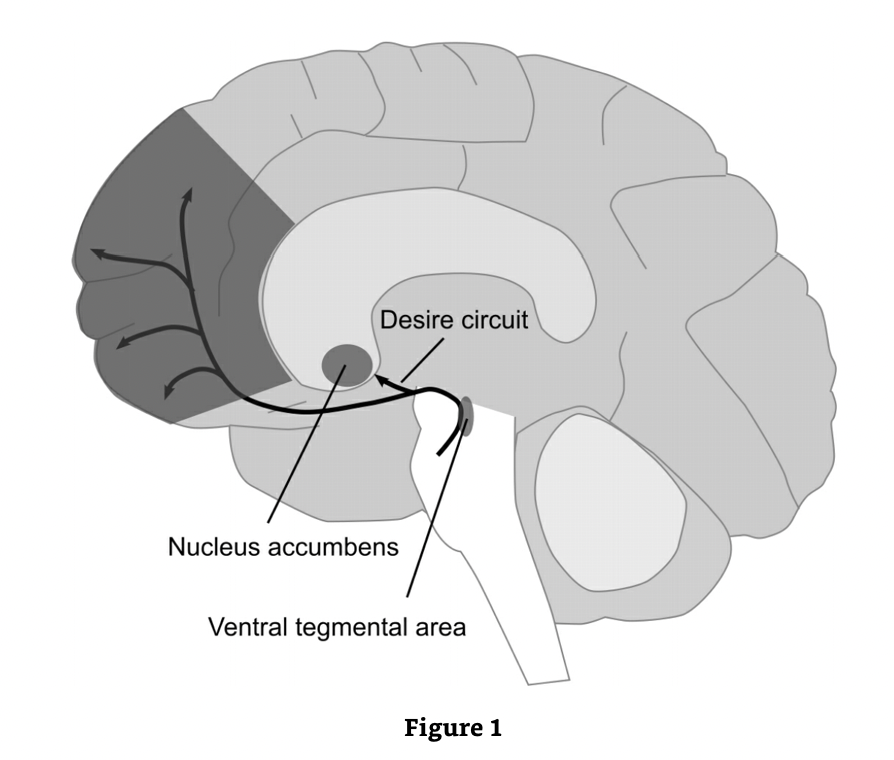
⇒ dopamine desire circuit
Not winning the lottery is bad luck; not winning an auction is social subordination.
Dopamine gets released when we see other people fail. Schadenfreude releases dopamine.
And nothing is good as the first time.
An emptiness comes from this combination of over-the-top nonnatural sources of reward and the inevitability of habituation; this is because unnaturally strong explosions of synthetic experience and sensation and pleasure evoke unnaturally strong degrees of habituation.
(p.68)
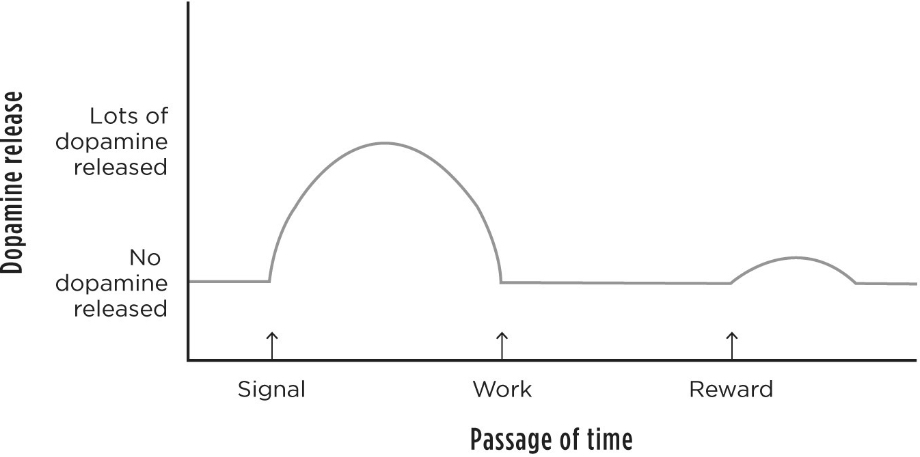
peak at 50% chance
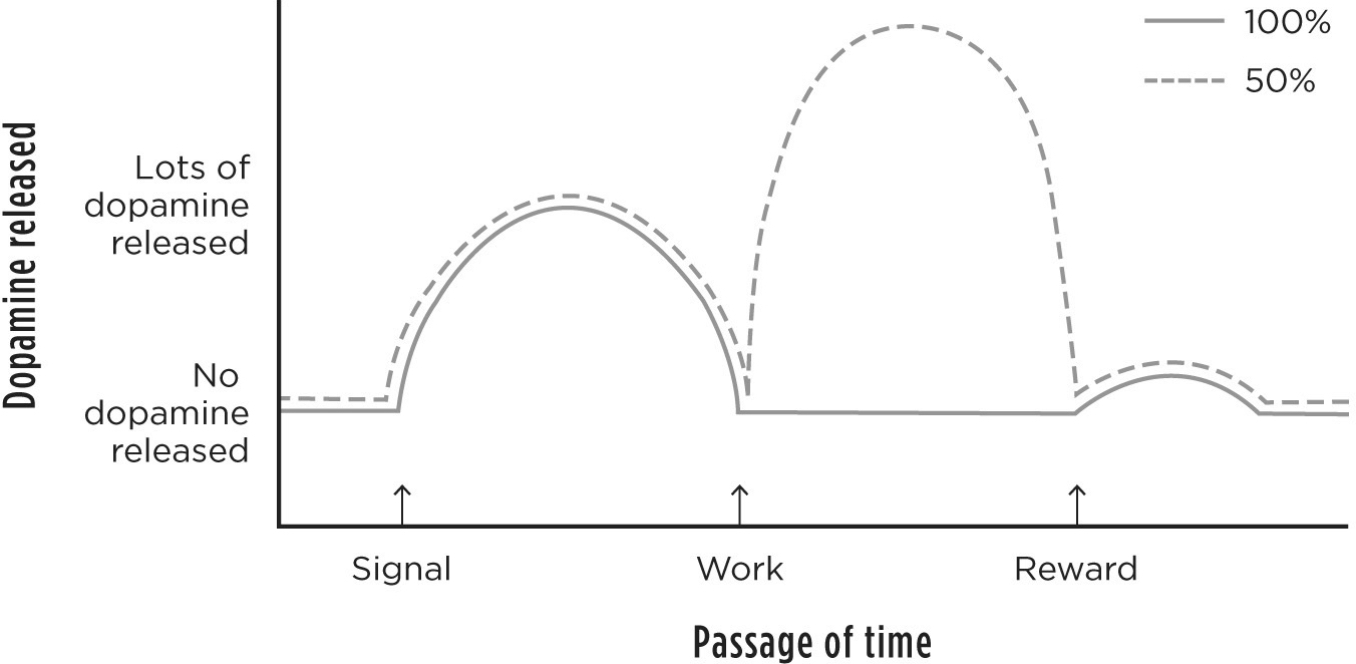
The most effective dopamine release is at a distribution of 25/75
25 success 75 failure
rewarding an organism for a behavior makes the organism more likely to repeat that behavior, while failure to get rewarded or, worse, punishment for it, makes the organism less likely to repeat it.
(p.80)
see also
Motivation
dopamine circuits.png
Tags: neuroscience science
Superlink: 050 🧠Neuroscience 020 👥Psychology
Quellen
[[Behave#Chapter 2 One Second Before#The mesolimbic mesocortical Dopamine System]]
Erstellt: 11-05-22 12:53